
Is it time to join the Xodus?
If you have been on X during the past few weeks, you will have noticed the same phrase keeps appearing - ‘Bluesky’.
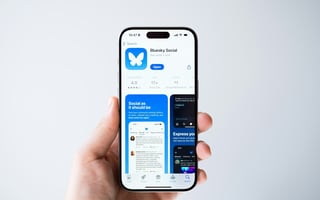
If you have been on X during the past few weeks, you will have noticed the same phrase keeps appearing - ‘Bluesky’.

The average radio interview is just over two and a half minutes long. Yet, as we stress during our media training courses, its power should not be underestimated.

In the ever-evolving world of PR, communications, and media, feedback isn’t just a helpful tool - it’s an essential one.

It has not been a good week for the royal family. A joint investigation by The Sunday Times and Channel 4's Dispatches has reported that King Charles and Prince William's private estates are taking millions from public bodies.

We’ve all been doing it for a while now, haven’t we? Yet, many of us still find group remote meetings and presentations an immense challenge and a barrier to effective communication.

The New York Times, The Financial Times, Associated Press, The Washington Post and Reuters. These are just some of the many worldwide publications that have covered stories on conkers this month.

How do you persuade a reluctant media spokesperson? What can you do if a journalist refuses to move on from a tricky area? Can you use a message too often during a media interview?

You can probably imagine the scenarios included in an airline’s crisis communication plan. Extreme weather, mechanical malfunctions, cyber-attacks and the mistreatment of passengers trending on social media are all likely to feature prominently.

‘What happens if a journalist asks me a question I don’t know how to answer?’ It is a common fear for spokespeople. And a question we often hear at the start of our media training courses.

One of Kamala Harris’s media interviews has caused a storm. Not because of anything the Democratic nominee said. But because she chose to appear on a podcast rather than traditional media.

Laura Kuenssberg’s cancelled interview with former Prime Minister Boris Johnson continues to gain lots of attention. What would have been a high-profile interview was canned after she accidentally sent him her briefing notes.

Brands sometimes need to communicate decisions they know will be unpopular. And that will attract negative headlines and social media posts. Two household name companies found themselves in that situation recently. And it put them in the firing line.

It feels like almost every day a brand announces new Environmental, Social and Governance (ESG) commitments and targets or a purpose-related strategy. From climate change to a living wage, businesses increasingly want to reach audiences with their ESG story.

What’s the aim of a media training course? Is it simply to help spokespeople avoid saying something damaging? Well, the hosts of a popular podcast believe it is.

We are often asked for examples of great presentations and speeches. Watching those who do it well can be a great way of enhancing your presentation skills and generating new ideas.

Experts increasingly warn it is a matter of ‘when’ not ‘if’ a company experiences a cyber security breach. More and more frequently, organisations across different industries are experiencing them.

While Oasis have been delivering a PR masterplan over the past week (until ‘dynamic pricing’ reared its head), the band’s long-awaited reunion has not resulted in positive coverage for everyone.

We’re often asked by our delegates how they can keep on top of their new skills after their media training course. There is often a gap between the course and the next media opportunity.

Another Olympic Games has come to an end. Two weeks of competition has brought no shortage of action, tension, tears and inspiration.

Too much to do and not enough time to do it in? We get it. Time often feels like it is in short supply for comms and media team professionals working in a fast-paced and relentless world.

Imagine you are in crisis media management mode. As the head of your organisation leaves your offices, they are greeted by reporters firing questions.

The Paris Olympics are serving up plenty of thrills and spills. But amid the attention-grabbing action and heart-stopping moments, there has been a lot of apologising.

Most organisations believe their story is important and newsworthy. However, only journalists and their Editors get to decide whether a story should be covered. So what exactly is it that interests journalists and what are they looking for in a story? What makes something newsworthy?

We all know the news cycle can feel bleak and depressing. But are you aware it is causing record numbers of people to avoid the news? A new report shows around four in ten adults “now say they sometimes or often avoid the news”.

We’re a little late with this one. But we recently stumbled across a great example of brilliant business writing.

Society can often appear to be more divided and polarised than ever. And it can feel like plenty of negativity surrounds ‘wokeness’. So, should brands stop raising awareness of injustices and avoid taking sides on crucial issues?

During our crisis communication training courses we tell delegates a crisis can come in many shapes and sizes. Not many, however, cause global chaos. But that was the crisis faced by CrowdStrike.
