
Squid Game, road signs and why you should consider newsjacking
Everyone in our team is talking about Squid Game. And we are not alone. The Korean drama seems to have quickly taken the world by storm.

Everyone in our team is talking about Squid Game. And we are not alone. The Korean drama seems to have quickly taken the world by storm.

It has been a time of both celebration and controversy for followers of football in Newcastle. The Saudi Arabian-backed £305m takeover of Newcastle United has been met with scenes of fan jubilation outside the stadium.

Many thought-provoking questions were posed during our webinar about building better relationships with your spokespeople.

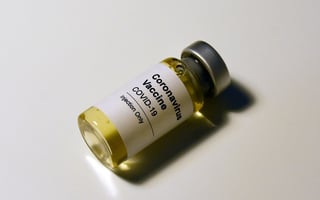
When the Government announced its plans to give 30 million people a covid booster jab to prevent another wave of the virus, we didn’t expect to hear a comparison to a wet and windy night on the side of the mountain. But that is exactly what we got.

Trade publications may not have the glamour of mainstream newspapers or appearing on TV or radio. In fact, some publications like Potato Storage International, Drain Trader and Poultry World have been the subject of jokes on Have I Got News For You.

There’s often much to be learnt from the way others perform in media interviews. Highlighting both the good and the not so good performances can help others prepare for their time in the spotlight and understand what to expect.

This is a question that is increasingly coming up when we speak to clients about presentation skills, hosting webinars and creating videos for both internal and external audiences.

It’s that time of year where much of the news coverage is filled by exam results. Students across the country have been receiving their A-level, GCSE and BTEC grades. TV screens, radio airwaves and newspapers have been full of students and teachers reacting to the results.

Spokespeople are precious. You need them to tell your story and make the most of media opportunities. And they are crucial for protecting your reputation when things go wrong.

When it comes to thought leadership, podcasts continue to go from strength to strength.

We all want to create memorable, meaningful messages. Whether you are delivering media interviews, responding to a crisis, writing, or trying to cut through the noise on digital channels, getting those messages right is crucial to standing out from the crowd.

If you’ve been on one of our media training courses before, you’ll know journalists love to speculate about the future.

We’ve got a webinar coming up soon about the science behind making messages memorable – you may have received one or two emails about it… Having listened to our expert panellists discuss some of the topics they will cover during the event, I know it is going to be one you won’t want to miss.

Media interviews can be a bit like buses. There can be times when you have little opportunity to put your media training skills to the test.

Giving feedback to senior leaders about their latest media interview can be a tough conversation. It can be particularly daunting and challenging if that feedback is negative.

What makes a good media spokesperson? Well, you need someone articulate. And they should be confident and comfortable with the subject being discussed.

It is not often tennis features in this media training blog. But Naomi Osaka’s decision not to speak to the media after matches during the French Open produced an avalanche of media coverage.

How would you respond to a question that asked you to comment on one of your competitors? Maybe you think their product is inferior – would you take the opportunity to bash them?

We’ve written before in our media training blogs about spokespeople who start their responses with ‘so’. It’s an infuriating habit we continue to hear in TV and radio interviews.

One of the big challenges bosses and communicators are currently facing is the messaging around the return to the office.

If you have been on one of our media training courses before, you will know that in the UK it is not advised to ask journalists for their questions ahead of an interview. It is an approach that is likely to make journalists suspicious the spokesperson, and their organisation, has something to hide.

Podcasts are going from strength to strength. There are now more than a million active podcasts and 30 million podcast episodes. And in the UK, podcasts now reach an audience of 15.6 million people.

How many times do you watch or listen to a news report and find that the organisation at the centre of the coverage responds through a statement? It may not be as damaging as an adversarial “did not provide a response”, but it is not a good way to manage a negative story.

Leaking ceilings, black mould and risks of electrocution. These are just some of the living conditions highlighted by a series of TV news reports this week.

There is some advice we give far more often than others during our media training courses. One of our golden rules we discuss during almost every course is the importance of spokespeople not repeating the journalist’s negative language.

We have written hundreds of blogs on media training. But searching through our back catalogue recently, it became clear we have written little about trade media interviews.

You’ve just carried out a series of TV interviews. What do you want the viewers to be talking about? That crucial message you were aiming to get across?

So, who had ‘town council meeting takes internet by storm’ on their 2021 bingo card? Just when you think things can’t get any more bizarre, footage from an obscure meeting went viral and resulted in extensive media coverage.

One of the benefits of the lockdown and working from home is I get to see and hear more media interviews. Not only does this help with inspiration for this media training blog but, with my headphones in, I can also largely ignore the home-schooling carnage erupting around me.
We love it when we hear and see excellent interviews we can highlight in this media training blog.
