









Skip to content
Most crises don’t arrive without warning.

Organisational Resilience Programme

They begin as issues — a decision questioned online, a service misunderstood, or a single post that gains momentum - often escalating before leaders are aware.

Handled early, traditional media can help restore balance and reassure stakeholders.

Left unchecked, journalists will amplify the issue and draw wider public attention and scrutiny.

Most organisations know what they should do to prepare for a crisis — but never quite get there. This programme creates structure, momentum and accountability, so crisis readiness actually happens.

What the Organisational
Resilience Programme includes:

A structured programme combining leadership alignment, crisis preparedness,
capability building and on-demand crisis support.

Expert-led crisis best practice briefing (2 - 4 hours)

A practical session helping your communications team understand how crises now develop — from emerging issues to social media escalation — and why early judgement and decision-making matter.

Media and crisis training (2 separate days + online awareness training)

Journalist-led training ensures your people can spot and escalate a crisis earlier, and spokespeople training reduces risk, avoids missteps, and maintains trust during high-pressure interviews and crisis situations.

Review and strengthening your crisis comms plan

We review your crisis policy, escalation routes and holding statements to ensure they’re realistic, usable under pressure, and aligned with how crises actually unfold.

Ongoing development for your comms team (24/7 online access)

Year-round access to practical learning, briefings and resources that reinforce best practice, support new starters, and keep crisis readiness front of mind.

Crisis leadership briefing for SLT/board (Typically 30 mins)

A short briefing aligning senior leaders around fast, visible leadership and CARE: Compassion, Action, Reassurance and Example - so communications teams are enabled, not blocked, when scrutiny hits.

Senior crisis communications support on tap (15 hours of ad hoc crisis consultancy)

Rapid access to senior strategic advice when issues emerge — providing reassurance, challenge and clear direction before situations escalate into full-scale crises.

OUR CLIENTS

Trusted across 40+ sectors.

guide_dogs_final_logo_rgb_display
1280px-equifax_logosvg
b__2_-removebg-preview
cancer_research_uk (2)
vodafone-logo__1_-removebg-preview
rbl-logo (1)
buckscclogo__1_-removebg-preview
image003-Feb-17-2025-04-31-16-8903-PM
nhs-logo
stanstedaiport-removebg-preview
image002-Feb-17-2025-03-42-15-3179-PM
bp-colour-png

Build Organisational Resilience 

Familiarity reduces panic

Teams and leaders who’ve thought it through before respond faster and more calmly.

Issues feel more manageable

Naming and exploring risks reduces anxiety and prevents overreaction.

Rehearsal improves judgement

Repeated exposure to realistic scenarios builds confidence and clarity under scrutiny.

Ongoing readiness supports leaders, not just plans

In a crisis, having support matters as much as having a plan. Ongoing access to experienced crisis communicators helps leaders make better decisions — and feel less alone when it counts.

From issues to crises: where problems really start

Very few crises begin with a phone call from a journalist. They start earlier — and quieter — as issues that feel manageable at the time.

A concern raised by staff.

A decision questioned in a Facebook group.

A change misunderstood by a small but motivated audience.

Left unattended, these moments gather momentum long before they reach the boardroom.

That’s why resilience starts with seeing issues sooner, not responding later.

Handled well, issues can be contained and resolved. Handled late, they invite scrutiny — and once journalists step in, the stakes rise fast.

The Organisational Resilience Programme helps you:

  • Horizon scan effectively

  • Surface known risks

  • De-escalate before amplification

  • Use the right tone for your organisation

“What working with Media First gave us wasn’t just crisis consultancy and media training — it was confidence and clarity long before issues escalated.

Media First helped our team and senior leaders really understand where issues start, how quickly they can grow, and why early decisions matter.

Because we’d already thought through language, tone and sequencing, when scrutiny came we were prepared. In some cases, that meant stories didn’t gain traction at all because we were able to respond clearly and quickly.

The support felt like a proper adult relationship — practical, calm and grounded in real experience. It strengthened our internal decision-making and helped ensure our communications team were supported by senior leadership, not slowed down by it.”

James Brown
James Brown, Director of Communications, Gloucestershire Hospitals NHS Foundation Trust
STEPS
A step-by-step guide to how we work with you to prepare and develop your media teams, spokespeople and wider organisation.

arrow orange Onboarding and orientation

Before the programme begins in earnest, we start with a short onboarding phase to ensure the Organisational Resilience Programme is grounded in your organisation from day one.

This is a focused orientation, not a generic kick-off.

We use this time to...
  • Build an understanding of your organisation, sector, stakeholders and operating environment
  • Clarify priorities, concerns and known pressure points
  • Agree escalation routes, points of contact and ways of working
  • Set clear expectations around pace, scope and how ongoing crisis support is used

This ensures the work that follows is relevant, proportionate and practical — and that senior support is in place quickly and calmly, without delay or confusion.

Step 1: Aligning senior leadership and trustees

Crisis communications succeed or fail at leadership level. Before plans are tested or spokespeople trained, senior leaders need a shared understanding of how crises now develop — and the role they play when scrutiny intensifies.

Learn more about Step 1

We deliver a short, focused briefing for your senior leadership team or board.

This ensures decision-makers understand the pace, pressure and public expectations they will face — and how their actions either enable or hinder an effective response.

What's included?

15 – 30 minute crisis leadership briefing for the Senior Leadership Team or Board of Directors

Focused on

  • Why early, visible leadership matters

  • The reputational risks of silence, delay or over-cautious decision-making and crisis media messaging

  • How leaders should communicate using the CARE framework
    (Compassion, Action, Reassurance, Example)

This alignment is critical. It helps ensure that when a crisis develops, communications teams are empowered to act quickly — supported by leadership, not slowed down by it.

Step 2: Building understanding 

What does good crisis management really looks like? Before plans are reviewed or spokespeople are trained, communications teams need a shared, realistic understanding of how crises develop and where risk comes from.

We cover:

This is not generic training - we'll dive into your industry and organisation's strengths and weaknesses and help you to plan for the unexpected so you and your team can sleep better at night.

  • What a crisis means for you and your organisation

  • Why speed, clarity and tone matter more than polish in the early stages

  • How small, well-intentioned delays or decisions can escalate into long-term reputational damage

  • The role of communications teams in filtering noise, spotting risk and translating what matters for senior leaders

What's included?

  • 2 - 4 hour crisis communications briefing delivered by a senior Media First crisis consultant

  • Delivered to your communications team (remote or in person)

  • Grounded in real-world examples, common failure points and best practice

Step 3: Reviewing and strengthening your crisis communications plan

We review your existing crisis communications arrangements to assess whether they are realistic, usable and fit for purpose under pressure.

We cover:

We provide clear, practical recommendations to close gaps and strengthen your approach, so that when something happens, you’re not relying on guesswork or outdated documents.

By this point, you have a crisis communications plan that has been reviewed and stress-tested by Media First, and a comms team aligned around how it should work.


What's included

This includes reviewing:

  •  Crisis communications policies and procedures

  • Roles, responsibilities and escalation routes

  • Decision-making and sign-off processes

  • Pre-prepared holding statements and draft messaging

  • Key stakeholders and communication channels

Step 4: Training the right spokespeople

Our training is journalist-led, practical and tailored to your risks and audiences.

Helping your spokespeople
  • Communicate clearly and confidently under pressure

  • Handle challenging questions and hostile lines of enquiry

  • Maintain credibility, empathy and authority during a crisis

This ensures you’re not relying on untested or unprepared individuals when scrutiny is at its highest.

What's included?
  • One full-day crisis management media training course for up to 8 people

  • One full-day crisis testing and coaching session for up to 8 people from your media relations and/or spokesperson team


Step 5: Developing your communications team year-round

Crisis readiness isn’t a one-off exercise.
Running alongside the live work above, we provide ongoing development and support for your communication and media relations teams through our Media Team Academy.

What's it for?

This builds depth and resilience within the team, reducing risk, bottlenecks and reliance on individuals.

Useful for:

  • Onboarding new team members

  • Refreshing crisis fundamentals

  • Ensuring all team members understand best-practice crisis response strategies and techniques

What's included?
  • Access to The Media Training Academy for the whole comms team (maximum 40 user licenses)

  • Access to relevant online learning programmes, webinars, eBooks, videos, podcasts, templates and toolkits


Step 6: Crisis awareness for frontline staff

Many crises don’t start with a press release — they start with a conversation.

We include access to an online crisis awareness course designed to be practical, proportionate, and non-alarmist.

Who's it for?

This online training is ideal for frontline teams such as:

  • Reception and front-of-house

  • Customer service and sales teams

  • Security and facilities staff

This helps ensure frontline staff don’t unknowingly create or escalate a crisis before the comms team is aware.

What's included?

This 30 minute self-guided online training covers:

  • What to do if approached by a journalist

  • How to escalate issues quickly and correctly

  • How small mistakes can unintentionally create bigger problems
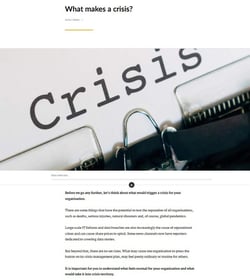
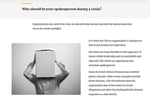
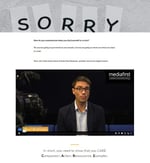
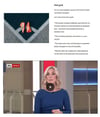
Screenshot what make a crisis   Screenshot spokesman Screenshot CARE   

Step 7: Ongoing strategic crisis communications support

Finally, the Organisation Resilience Programme provides year-round access to senior crisis communications expertise.

This is peace of mind for your media team and senior leaders.

What's included?

Support can be used flexibly for emerging issues, holding statements, Q&As, spokesperson crisis preparation and internal communications advice.

  • A bank of up to 15 hours of senior strategic crisis communications support over 12 months

  • A named senior consultant who understands your organisation

  • Rapid-response access Monday–Friday, 08:00–20:00, with a two-hour callback

  • Preferential rates for additional support if required

STEPS

A step-by-step guide to how we work with you to prepare and develop your media teams, spokespeople and wider organisation.


Onboarding and orientation

Before the programme begins in earnest, we start with a short onboarding phase to ensure the
Organisational Resilience Programme is grounded in your organisation from day one.


This is a focused orientation, not a generic kick-off.

How does this work?

We use this time to...

  • Build an understanding of your organisation, sector, stakeholders and operating environment

  • Clarify priorities, concerns and known pressure points

  • Agree escalation routes, points of contact and ways of working

  • Set clear expectations around pace, scope and how ongoing crisis support is used

This ensures the work that follows is relevant, proportionate and practical — and that senior support is in place quickly and calmly, without delay or confusion.


Step 1: Aligning senior leadership and trustees

Crisis communications succeed or fail at leadership level. Before plans are tested or spokespeople trained,
senior leaders need a shared understanding of how crises now develop — and the role they play when scrutiny intensifies.

How does this work?

We deliver a short, focused briefing for your senior leadership team or board.
This ensures decision-makers understand the pace, pressure and public expectations they will face — and how their actions either enable or hinder an effective response.


What's included?

  • A 15 – 30 minute crisis leadership briefing for the Senior Leadership Team or Board of Directors


Focussed on

  • Why early, visible leadership matters

  • The reputational risks of silence, delay or over-cautious decision-making and crisis media messaging

  • How leaders should communicate using the CARE framework
    (Compassion, Action, Reassurance, Example)

This alignment is critical.
It helps ensure that when a crisis develops, communications teams are empowered to act quickly — supported by leadership, not slowed down by it.


Step 2: Building understanding

What does good crisis management really looks like? Before plans are reviewed or spokespeople
are trained, communications teams need a shared, realistic understanding of how crises develop and where risk comes from.

How does this work?

This is not generic training - we'll dive into your industry and organisation's strengths and weaknesses and help you to plan for the unexpected so you and your team can sleep better at night.


We cover:

  • What a crisis means for you and your organisation

  • Why speed, clarity and tone matter more than polish in the early stages

  • How small, well-intentioned delays or decisions can escalate into long-term reputational damage

  • The role of communications teams in filtering noise, spotting risk and translating what matters for senior leaders


What's included?

  • 2 - 4 hour crisis communications briefing delivered by a senior Media First crisis consultant

  • Delivered to your communications team (remote or in person)

  • Grounded in real-world examples, common failure points and best practice


Step 3: Reviewing and strengthening your crisis communications plan

We review your existing crisis communications arrangements to assess whether they are realistic,
usable and fit for purpose under pressure.

How does this work?

We provide clear, practical recommendations to close gaps and strengthen your approach, so that when something happens, you’re not relying on guesswork or outdated documents.

By this point, you have a crisis communications plan that has been reviewed and stress-tested by Media First, and a comms team aligned around how it should work.


What's included?

This includes reviewing:

  • Crisis communications policies and procedures

  • Roles, responsibilities and escalation routes

  • Decision-making and sign-off processes

  • Pre-prepared holding statements and draft messaging

  • Key stakeholders and communication channels


Step 4: Crisis communication training for your people

Our training is journalist-led, practical and tailored to your risks and audiences.

What training is included?

As part of the programme, you will receive two full days of crisis communications training:

Training can be focused on:

  • Spokespeople

  • Communications teams

  • Senior leaders

  • Or a combination, depending on need


Depending on your level of preparedness, the training may include:

  • Crisis-focused media skills training for spokespeople

  • Scenario-led interview practice based on realistic crisis situations

  • Coaching and feedback to help individuals improve performance and decision-making

  • Sessions that help teams understand how communications and leadership decisions connect during a crisis

The emphasis is on building confidence and capability — not catching people out or running a full crisis simulation.

A full crisis simulation test is not included as standard in the Organisational Resilience Programme but can be added once the foundations are in place.


Step 5: Developing your communications team year-round

Crisis readiness isn’t a one-off exercise. Running alongside the live work above, we provide ongoing development
and support for your communication and media relations teams through our Media Team Academy.

How does this work?

The information provided through our Academy builds depth and resilience within the team, reducing risk, bottlenecks and reliance on individuals.

This is useful for:

  • Onboarding new team members

  • Refreshing crisis fundamentals

  • Ensuring all team members understand best-practice crisis response strategies and techniques


What's included?

  • Access to The Media Team Academy for the whole comms team (maximum 40 user licenses)

  • Access to relevant online learning programmes, webinars, eBooks, videos, podcasts, templates and toolkits


STEPS

Step 1: Aligning senior leadership and trustees

Crisis communications succeed or fail at leadership level.

Before plans are tested or spokespeople trained, senior leaders need a shared understanding of how crises now develop — and the role they play when scrutiny intensifies.

Thats why we deliver a short, focused briefing for your senior leadership team or board.

This ensures decision-makers understand the pace, pressure and public expectations they will face — and how their actions either enable or hinder an effective response.

Included

  • 15 – 30 minute crisis leadership briefing for the Senior Leadership Team or Board of Directors

Focused on

  • Why early, visible leadership matters

  • The reputational risks of silence, delay or over-cautious decision-making and crisis media messaging

  • How leaders should communicate using the CARE framework
    (Compassion, Action, Reassurance, Example)

This alignment is critical. It helps ensure that when a crisis develops, communications teams are empowered to act quickly — supported by leadership, not slowed down by it.

Step 2: Building understanding – what good crisis management really looks like

Before plans are reviewed or spokespeople are trained, communications teams need a shared, realistic understanding of how crises now develop — and where risk actually comes from.

This is not generic training - we'll dive into your industry and organisation's strengths and weaknesses and help you to plan for the unexpected so you and your team can sleep better at night.

We cover:

  • What a crisis means for you and your organisation

  • Why speed, clarity and tone matter more than polish in the early stages

  • How small, well-intentioned delays or decisions can escalate into long-term reputational damage

  • The role of communications teams in filtering noise, spotting risk and translating what matters for senior leaders

Included:

  • 2 - 4 hour crisis communications briefing delivered by a senior Media First crisis consultant

  • Delivered to your communications team (remote or in person)

  • Grounded in real-world examples, common failure points and best practice


Step 3: Reviewing and strengthening your crisis communications plan

We review your existing crisis communications arrangements to assess whether they are realistic, usable and fit for purpose under pressure.

We then provide clear, practical recommendations to close gaps and strengthen your approach, so that when something happens, you’re not relying on guesswork or outdated documents.

By this point, you have a crisis communications plan that has been reviewed and stress-tested by Media First, and a comms team aligned around how it should work.

This includes reviewing:

  • Crisis communications policies and procedures

  • Roles, responsibilities and escalation routes

  • Decision-making and sign-off processes

  • Pre-prepared holding statements and draft messaging

  • Key stakeholders and communication channels


Step 4: Training the right spokespeople

Training is journalist-led, practical and tailored to your risks and audiences, helping media teams and spokespeople:

  • Communicate clearly and confidently under pressure

  • Handle challenging questions and hostile lines of enquiry

  • Maintain credibility, empathy and authority during a crisis

This ensures you’re not relying on untested or unprepared individuals when scrutiny is at its highest.

Included:

  • One full-day crisis management media training course for up to 8 people

  • One full-day crisis testing and coaching session for up to 8 people from your media relations and/or spokesperson team


Step 5: Developing your communications team year-round

Crisis readiness isn’t a one-off exercise.

Running alongside the live work above, we provide ongoing development and support for your communication and media relations teams.

This builds depth and resilience within the team, reducing risk, bottlenecks and reliance on individuals.

Useful for:

    • Onboarding new team members

    • Refreshing crisis fundamentals

    • Ensuring all team members understand best-practice crisis response strategies and techniques

Included:

  • Access to The Media Training Academy for the whole comms team (maximum 40 user licenses)

  • Access to relevant online learning programmes, webinars, eBooks, videos, podcasts, templates and toolkits

Step 6: Crisis awareness for frontline staff

Many crises don’t start with a press release — they start with a conversation.

We include access to an online crisis awareness course designed to be practical, proportionate, and non-alarmist.

Ideal for frontline teams such as:

  • Reception and front-of-house

  • Customer service and sales teams

  • Security and facilities staff

This helps ensure frontline staff don’t unknowingly create or escalate a crisis before the comms team is aware.

The 30 minute self-guided online training covers:

  • What to do if approached by a journalist

  • How to escalate issues quickly and correctly

  • How small mistakes can unintentionally create bigger problems
Screenshot what make a crisis
Screenshot spokesman
Screenshot CARE
Screenshot og

Step 7: Ongoing strategic crisis communications support

Finally, the Organisation Resilience Programme provides year-round access to senior crisis communications expertise.

This is peace of mind for your media team and senior leaders.

Support can be used flexibly for emerging issues, holding statements, Q&As, spokesperson crisis preparation and internal communications advice.

Included:

  • A bank of up to 15 hours of senior strategic crisis communications support over 12 months

  • A named senior consultant who understands your organisation

  • Rapid-response access Monday–Friday, 08:00–20:00, with a two-hour callback

  • Preferential rates for additional support if required

Step 6: Crisis awareness for frontline staff

Many crises don’t start with a press release — they start with a conversation.

We include access to an online crisis awareness course designed to be practical, proportionate, and non-alarmist.

How does this work?

This online training is ideal for frontline teams such as:

  • Reception and front-of-house

  • Customer service and sales teams

  • Security and facilities staff

This helps ensure frontline staff don’t unknowingly create or escalate a crisis before the comms team is aware.


What's included?

This 30 minute self-guided online training covers:

  • What to do if approached by a journalist

  • How to escalate issues quickly and correctly

  • How small mistakes can unintentionally create bigger problems

Screenshot what make a crisis Screenshot spokesman Screenshot CARE


Step 7: Ongoing strategic crisis communications support

When pressure is high, you have access to senior crisis communicators for calm, experienced guidance — whether
that’s sense-checking a statement or helping you decide your next move.

How does this work?

Support can be used flexibly for emerging issues, holding statements, Q&As, spokesperson crisis preparation and internal communications advice.


What's included?

  • A bank of up to 15 hours of senior strategic crisis communications support over 12 months

  • A named senior consultant who understands your organisation

  • Rapid-response access Monday–Friday, 08:00–20:00, with a two-hour callback

  • Preferential rates for additional support if required


OUR PEOPLE

Programme leadership
and senior crisis team

A tried and trusted team of journalists and crisis comms experts

Sean Ryan Communication Consultant

Sean Ryan

Strategic Communication, Leadership & Reputation

Sean is a senior communications consultant who helps organisations build trust, strengthen reputation and communicate effectively in complex and fast-moving environments. He advises senior leaders on communication strategy, stakeholder engagement, organisational change and executive communication, helping organisations navigate challenges while maintaining confidence among key audiences.

With more than 30 years' experience across journalism, communications and international organisations, Sean has a deep understanding of how leaders can influence perceptions, shape organisational narratives and engage stakeholders. A former senior editor at The Sunday Times and communications leader at Save the Children, he combines strategic perspective with practical advice that leaders can apply immediately.

Sean supports organisations across the public, private and charitable sectors on reputation management, leadership communication, organisational positioning and change programmes. He is particularly skilled at helping leaders communicate with clarity, credibility and authority when the stakes are highest.

victoria-s-crop_small

Victoria Smith

Presentation Skills, Executive Presence & Impact

Vic helps leaders and subject matter experts communicate with greater confidence, clarity and impact. Drawing on an extensive journalism career with the BBC, ITV, Sky News and other major broadcasters, she helps delegates develop the skills needed to engage audiences, deliver memorable presentations and communicate complex issues effectively. Combining a journalist's understanding of audience expectations with practical coaching techniques, Vic helps people strengthen their presence, refine their messages and deliver presentations that inspire confidence and drive action.

Elisa Colton Communication Consultant

Elisa Colton

Stakeholder Engagement, Strategic Communications & Change

Elisa helps organisations communicate complex issues in ways that build understanding, trust and support. With almost 20 years' experience in journalism and communications, including senior roles with the BBC and Al Jazeera, she brings deep expertise in audience engagement, stakeholder communication and strategic messaging.

She advises organisations on communication strategy, organisational change, stakeholder relationships and reputation management, helping leaders develop clear and persuasive narratives that resonate with internal and external audiences alike. Elisa is particularly skilled at supporting organisations through periods of transformation and uncertainty.
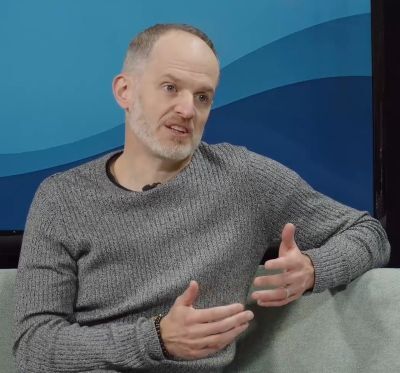
Adam Fisher_small1

Adam Fisher

Media First’s senior content editor 

Adam Fisher is Media First’s senior content editor and plays a key role in supporting organisations through crisis communications by shaping clear, accurate and credible written content under pressure.

Following in his father’s footsteps, Adam began his career in journalism and has worked across both news and sports desks for a number of newspapers. This background gives him a strong editorial instinct for what makes a story travel, how narratives are framed, and how journalists interrogate language, claims and tone.

At Media First, Adam works closely with communications teams during sensitive and fast-moving situations, helping them develop clear holding statements, Q&As, reactive lines and longer-form content that stands up to scrutiny. His role is particularly important in ensuring messaging remains consistent, disciplined and audience-aware as situations evolve.

Adam is valued for his attention to detail, calm editorial judgement and ability to translate complex or emotionally charged issues into language that is clear, measured and defensible.
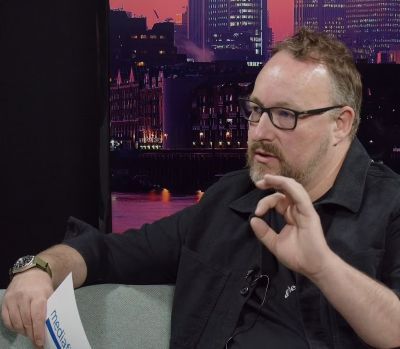
James_W_small3-1

James White

Chief Executive Officer of Media First

James White is Chief Executive Officer of Media First and a senior adviser on the Organisational Resilience Programme, working with boards, senior leaders and communications teams during periods of heightened scrutiny.

James began his career in journalism before moving into account management and communications consultancy. He joined Media First in 2011, became Managing Director in 2012, and has been CEO for the past two years.

Throughout that time, he has remained closely involved in crisis communications work across the public and private sectors.

James brings a practical understanding of how issues escalate, how media pressure develops, and how early leadership decisions shape reputational outcomes.

He is particularly experienced in helping organisations align senior decision-making, support communications teams, and maintain clarity and control when situations are fast-moving or uncertain.

Clients value James for his calm, direct approach and his ability to act as a trusted sounding board for leaders when the stakes are high.

Sean Ryan

Sean Ryan leads Media First’s Organisational Resilience Programme, bringing together more than 30 years of frontline journalism and senior communications leadership in high-pressure environments.

Sean began his career as a journalist and spent many years at The Sunday Times, where he held senior editorial roles including Associate Editor and Foreign Editor.

He oversaw digital output across the paper’s platforms, led major news features and campaigns, and managed coverage of global conflicts and crises.

Earlier roles included specialist reporting in health, consumer affairs, investigations, science, technology, energy and the environment.

He later spent a decade as Director of Media and Communications at Save the Children, advising senior leaders on reputation, risk and crisis communications. His work ranged from high-profile public campaigns to managing complex, fast-moving crises in some of the world’s most challenging environments, including Gaza, Ukraine, Somalia, Haiti and Myanmar.

Across his career, Sean has reported on – or overseen coverage of – some of the most high-profile corporate and institutional crises of recent decades, including BP and Deepwater Horizon, Volkswagen’s emissions scandal, Malaysia Airlines MH370 and P&O.

Sean is known for his calm, pragmatic approach and his ability to help leaders and communications teams make clear decisions under pressure. 

Investment

The Organisational Resilience Programme is delivered as a structured, year-round approach to issues management, crisis preparedness and leadership support.

It combines:

  • Programme onboarding and senior leadership alignment

  • Practical training for comms teams and spokespeople

  • Crisis documentation and process reviews

  • Ongoing media relations development

  • On-demand strategic crisis communications support

This programme is designed to replace reactive, one-off crisis spend with predictable, proactive support that builds confidence and capability over time.

Full programme value breakdown

We bring these elements together as a single, integrated approach, delivered for £1,700 + vat per month (12-month minimum term).

Senior leadership & decision-making

Programme onboarding and orientation Included as part of the Organisational Resilience Programme ensuring rapid understanding, clear escalation and effective use of support from day one.

Senior leadership and trustee alignment briefing Typical standalone value: £1,400 + vat

Crisis preparedness & planning

Crisis best practice briefing for communications teams Typical standalone value: £1,700 + vat

Review and strengthening of your crisis communications plan Typical standalone value: £3,500 + vat

Training & capability building

Your Account Manager will work with you to agree on the most effective use of your two full days of crisis communications training, based on your organisation’s level of preparedness and the people who would be involved in a real incident.

For many organisations, at least one of these days is used to upskill designated crisis spokespeople.

This may include:

  • Crisis media training for designated spokespeople
    1 full day
    Typical standalone value: £4,200 + VAT

Other organisations may feel they need greater focus on decision-making, coordination and internal communications during a crisis. In these cases, training can be directed towards communications teams or crisis management teams.

This may include:

  • Crisis management training for communications or crisis management teams
    Typical standalone value: £4,200 + VAT

In addition to the core training days, the programme also includes longer-term capability building across your organisation:

  • Ongoing CPD for communications teams
    (Media Team Academy access for up to 40 people)
    Typical standalone value: £4,500 + VAT

  • Crisis awareness online training for frontline staff (self-guided learning, max 200 people)

    Typical standalone value: £2,000 – £10,000 + VAT
    (dependent on user numbers)

Strategic crisis support

Ongoing senior strategic crisis communications support (15 hours)
Typical standalone value: £8,000 + vat