.png?width=147&height=56&name=image%20(1).png)

It is a crisis media management incident that has been labelled “shocking” by the Prime Minister.
Well, 2025 certainly hasn’t lacked news, has it?
It’s been 12 months that have seen many organisations stumble in the crisis media management spotlight.
And, occasionally, some who navigated their crisis expertly.
Good and bad examples both offer crisis communication case studies others can learn from.
So, shall we take a look at some of the crises that have stood out this year?
The year of the cyber attack
If 2025 has taught us anything, it is surely that cyber-security breaches need to be at the top of crisis communication plans.
Jaguar Land Rover, the Co-op, Harrods and the Royal Borough of Kensington and Chelsea are just some of the organisations hit by cyber-attacks.
The one that grabbed the most attention wasn’t just any cyber incident – it was an M&S cyber incident.
The leading retailer endured a long-lasting attack, with its online shopping unavailable from April until June.
And shelves were empty in the days immediately after the attack.
It has subsequently been revealed that the attack is expected to cost £136m.
And, of course, the crisis has been a test of its reputation.
But there was a lot to like about how it handled the initial stages, particularly the visible leadership from its boss.
A prompt, personalised email to customers, from chief executive Stuart Machin, was also shared on social media channels.
It showed that he was leading the response, and the tone felt open and honest.
I also like the simplicity and human feel - “We have been working with the best experts to manage this” and “there is no need for you to take any action at this time”.
But “I am sincerely sorry if you experienced any inconvenience” could have been better. Why add the dreaded ‘any’ clause? It was obvious customers were being inconvenienced.
People tend to remember how a brand initially responds to a crisis. It’s when public interest is at its highest.
But it's worth saying that M&S’s crisis response appeared to tail off after a strong start.
It was criticised for the delayed confirmation that customer data had been compromised and for the frequency of its subsequent update.
Mr Machin also gave an interview to the Daily Mail a month into the crisis, where he seemed to play down the crisis, saying: “I wouldn't call it a crisis – that is too dramatic.”
Asked what he would call it, he said: “An incident, a setback, a bump in the road, a disruption.”
An expensive bump in the road.
But let’s finish this part of our blog on a high. I loved how M&S changed the narrative surrounding it in June when it launched a strawberries and cream sandwich. The limited-edition treat was launched to coincide with Wimbledon.
And it went viral, generating some much-needed positive coverage for a brand that has been in crisis media management mode – or hitting a bump in the road - for a long time
Water, water everywhere (apart from Tunbridge Wells)
Away from cyber incidents, it has been another bleak year for the water industry.
Performance, finances and calls for “root and branch reform” have seen it rarely flow far from the headlines.
But it was South East Water and its handling of a water supply issue in Tunbridge Wells which grabbed our crisis comms attention.
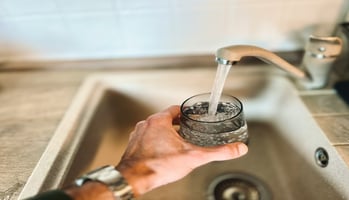
The crisis impacted 24,000 properties, leaving them with little or no water for days.
And the water they had needed to be boiled before being used for drinking, washing up, preparing food or brushing teeth.
Keir Stamer called the situation “shocking”. Liberal Democrat leader Ed Davey said it was a “public health emergency”.
What stood out about this crisis was the lack of visible leadership.
In fact, David Hinton’s absence became part of the crisis narrative, with several publications running ‘Where’s Dave’ and ‘missing in action’ headlines.
Kent Online even put his image on a wanted poster.
It was not a great look.
And it is an approach that goes against crisis media management rules.
A crisis causing major upheaval like this requires visible leadership.
People need to see that the incident is being managed by the top of the organisation. That those in charge are accountable and taking action to resolve the situation. And, most importantly, that they care about what has happened.
In a crisis like this, they also want to see that the boss knows what is happening on the ground and is listening to those suffering.
Facing the media – and the public – in the tough times is part of the job.
His absence from the spotlight created the perception that he went missing when he was needed the most.
And that is painfully hot water for any CEO to find themself in.
A viral video crisis
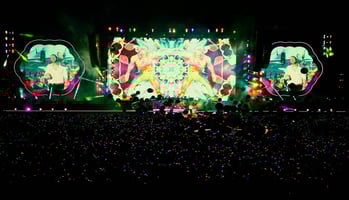
Who can forget the Coldplay kiss cam crisis?
The awkward encounter on a big screen was probably one of the moments of the year and put a little-known tech company – Astronomer - at the centre of the global media spotlight.
The cringeworthy encounter was quickly shared on TikTok, where it has received millions of views before moving on to other social media, where the couple were identified as bosses of the company.
The internet went into a frenzy. And that captured the interest of traditional media.
The coverage there was almost as endless as the social media posts and memes - there were 22,000 news articles in the first 24 hours of the crisis.
And what did Astronomer do?
It stayed quiet for 48 hours. Not only did this silence allow the number of articles, opinion pieces and memes to grow, it also enabled a fake statement from its CEO to be shared on social media.
It’s a crisis that highlights the importance of responding quickly.
A holding statement acknowledging the video, expressing regret and saying it was being investigated (or that facts are being gathered) could have limited the damage and reduced the spread of speculation, misleading information and fake statements.
Eventually, the company issued a statement on its social media channels containing little that could not have been said much earlier.
But it subsequently ripped up the crisis comms playbook, releasing a viral video with Gwyneth Paltrow as the company’s “very temporary” spokesperson.
It was a bold, audacious, high-risk crisis media management response to a memorable corporate scandal.
A real crisis headache
We are always stressing the importance of brands being crisis-ready.
But does your crisis plan include the powers that be suddenly warning people not to use your product?
That was the situation Kenvue found itself in after US President Donald Trump warned he believed there was a link between autism and pregnant women using its Tylenol product.
In an extraordinary White House press conference, the President blamed acetaminophen – Tylenol’s active ingredient (and known to us as paracetamol) - for causing autism.
He said that Tylenol, "is no good" and that pregnant women should "fight like hell" to only take it in cases of extreme fever.
But the brand was prepared. Its website quickly featured a reassuring pop-up.
It said: “We stand with science, and we stand with you.”
And it adds that the product is “one of the most studied medications in history”.
It went on to say: “The facts remain unchanged: over a decade of rigorous research, endorsed by leading medical professionals, confirm there is no credible evidence linking acetaminophen to autism.”
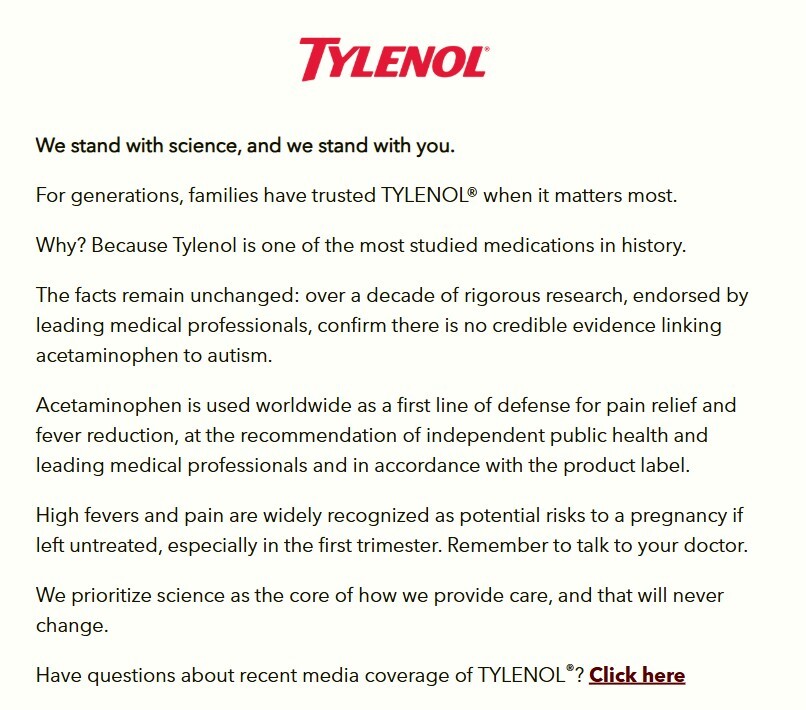
The pop-up linked to a detailed Q&A page, which said “credible, independent scientific data continues to show no proven link between taking acetaminophen and autism”.
It also issued a strongly worded media statement saying: “We believe independent, sound science clearly shows that taking acetaminophen does not cause autism.
“We strongly disagree with any suggestion otherwise and are deeply concerned with the health risk this poses for expecting mothers.”
Its crisis communication was timely, calm, and clear, with easy-to-understand language. I particularly like this line on its Q&A: “Our best advice? Talk to your healthcare professional before taking or administering acetaminophen.”
Excellent.
Its response was robust, but it also carefully avoided criticising what was said in the White House.
Instead, it leaned on the science and has pointed people to credible third-party sources of information, which offers reassurance.
An excellent response to a painful crisis.
Back to the shops
Waitrose is another retailer that found itself facing a tricky crisis.
It made headlines for all the wrong reasons with its treatment of autistic worker Tom Boyd who had clocked up a staggering 600 hours of unpaid work.
When his mum, Frances, asked if he could be offered "just a few paid hours", the supermarket reportedly told him he had to stop and could not return to work.
As well as damning media coverage, there was a strong social media response to the story, led by Andy Burnham, the mayor of Greater Manchester.
He called the Waitrose treatment of Tom “truly terrible” in an X post that received 1.5 million views.
And he vowed to support him to “find another placement that works”.
The company’s initial response to the story was pretty ordinary.
It said: “We work hard to be an inclusive employer.
“As part of this we partner with a number of charities, including to provide work experience, and are well experienced in making reasonable adjustments to help people succeed at work.
"We are sorry to hear of Tom's story and whilst we cannot comment on individual cases, we are investigating as a priority."
It’s a response that feels cold, defensive, and detached. And weirdly, given the circumstance, a bit self-praising.
It was responding to a story about Tom, but he wasn’t mentioned until the last line.
Looks like the supermarket could do with learning our CARE crisis comms framework.
After rivals Asda offered Tom paid work, Waitrose announced it was reversing its decision.
A spokesman for Waitrose said: "We'd like to welcome Tom back, in paid employment, and are seeking support from his family and the charity to do so.
"We hope to see him back with us very soon.
"We care deeply about helping people into the workplace who might otherwise not be given a chance.”
It is an offer we recently learnt has been accepted, with Tom due to return to Waitrose in January.
So, a happy ending. But it should not have taken a PR disaster to get there.
A word on the Andrew formerly known as prince
No review of the crises of 2025 would be complete without a mention of Andrew Mountbatten-Windsor.
Could this be the end of the longest of long-running crises?
Probably not.
In mid-October, the then Prince Andrew announced in a statement that he would “no longer use my title or the honours which have been conferred upon me”.
The move, he said, was taken because “the continued accusations about me distract from the work of His Majesty and the Royal Family.”
And he added that he “vigorously” denies the allegations against him.
It came as extracts from the posthumous memoir of Andrew’s accuser, Virginia Giuffre, were published in the media.
But a week later, amid ongoing scrutiny and questions, there was a further statement – this time from Buckingham Palace and much more hard-hitting.
It said: “His Majesty has today initiated a formal process to remove the style, titles and honours of Prince Andrew.
"Prince Andrew will now be known as Andrew Mountbatten Windsor.
"His lease on Royal Lodge has, to date, provided him with legal protection to continue in residence.
"Formal notice has now been served to surrender the lease and he will move to alternative private accommodation.”
The statement concluded by saying: “Their Majesties wish to make clear that their thoughts and utmost sympathies have been, and will remain with, the victims and survivors of any and all forms of abuse.”
That second statement was an improvement and was packed with action – a crucial part of crisis media management responses.
And it has been described as “decisive”.
But decisive is not a word that fits how the royals have handled this crisis.
The Royal Family took too long to grip the crisis and seemed out of kilter with public anger.
Shortly before Andrew was stripped of his titles, King Charles was heckled during a visit to Lichfield Cathedral.
And a YouGov poll around the same time showed 91 per cent of Britons now had a negative impression of the then prince.
It took a long time to get there. But finally, the royal family seemed to understand the levels of public anger about Andrew and his relationship with convicted sex offender Jeffrey Epstein.
But, with calls for further sanctions, a potential private prosecution in the US, and increased scrutiny of royal finances, there are likely to be more chapters to this crisis.
Andy finally…
We want to leave you with something light-hearted.
Two bears escaping from their enclosure feels like a scary crisis.
But all ended well for Wildwood Devon.
Siblings Mish and Lucy broke out of their living quarters in June, triggering the wildlife sanctuary’s emergency protocols to kick into action.
But seemingly, the only danger the 30-stone bears posed was to the conservation charity’s food supplies.
In scenes that sound like they could have come from Winnie the Pooh, the wandering bears made a beeline for the honey store - where they ate a week’s supply.
And they made their way through peanut butter and all the bananas, apples, fresh food and vegetables from a delivery made an hour before they escaped.
Mish returned to his enclosure after an hour for a post-feast nap, while Lucy was coaxed back by workers ringing a recall bell.
What could have been a dangerous situation – for people and the trust’s reputation - turned into a PR win for Wildwood Devon.
Its crisis comms were timely and transparent. There was plenty of action in what it has said – an internal investigation is underway. And there was a focus on reassurance – the bears did not enter any public areas and “remained very calm throughout”.
During an interview with BBC Radio Devon, Mark Habben, the director of zoo operations at the charity, discussed safety, apologised for the alarm the escape caused, and reiterated how well emergency protocols had worked.
He said: “We are sorry it would have caused distress to anyone on site. Being chaperoned into a safe building isn’t what you would expect or hope for.
“We thrive on creating a safe environment for people and bears."
He also discussed the part of the story that captured the imagination.
“You can’t blame them,” he said.
“There is no hiding honey from a brown bear.
“They remain, to this moment, extremely content, very happy bears, with slightly less honey than they were afforded yesterday.”
And that feels like a sweet place to end our crisis review of 2025.

Media First are media and communications training specialists with nearly 40 years of experience.
We have a team of trainers, each with decades of experience working as journalists, presenters, communications coaches and media trainers.
Click here to find out more about our crisis communication training courses